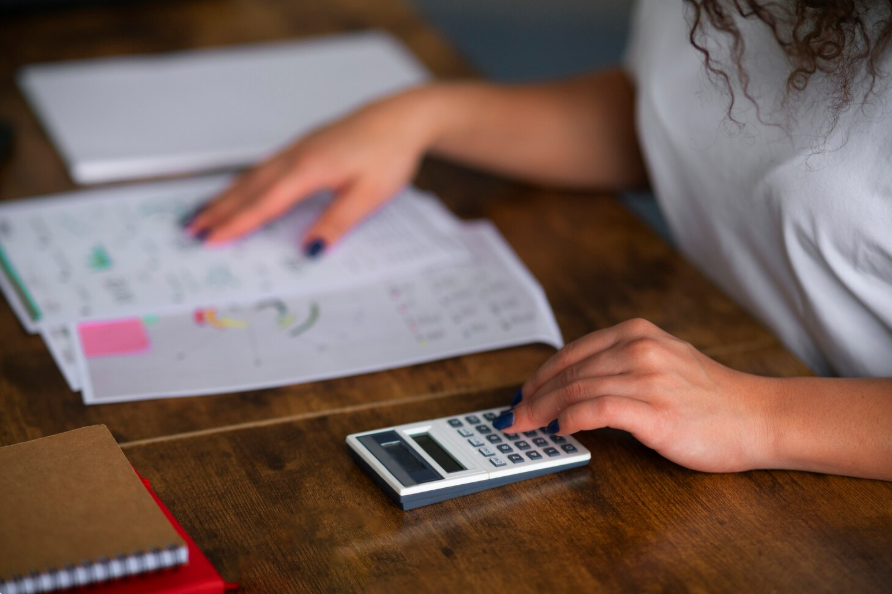
In everyday life, numbers are often expressed in different forms such as fractions, decimals, and percentages. Being able to convert between these forms is an essential skill that helps in better understanding and comparison of values. Many people rely on tools like a fraction to percentage calculator to quickly convert fractions into percentages without going through manual steps. These tools simplify the process and ensure accuracy, especially when dealing with complex fractions or time sensitive tasks.
A fraction represents a part of a whole, while a percentage expresses that same value out of one hundred. Converting a fraction into a percentage makes it easier to interpret and compare values. For example, the fraction 1 by 2 can be converted into 50 percent, which is more intuitive for most people to understand. This is why percentages are widely used in areas such as education, finance, and data analysis.
The process of converting a fraction to a percentage is straightforward. You divide the numerator by the denominator to get a decimal, and then multiply the result by one hundred. For instance, if you have the fraction 3 by 4, dividing 3 by 4 gives 0.75. Multiplying 0.75 by one hundred results in 75 percent. While this method is simple, it can become time consuming when dealing with multiple or complex fractions. This is where digital tools become highly useful.
Percentages are commonly used in academic settings to represent scores and performance. Students often encounter fractions in tests and assignments, and converting them into percentages helps in evaluating results more clearly. Teachers also use percentages to standardize grading systems, making it easier to compare performance across different subjects and assessments.
In finance, percentages play a crucial role in understanding interest rates, discounts, and investment returns. Converting fractions into percentages allows individuals to interpret financial data more effectively. For example, if an investment grows by a fraction of its original value, expressing that growth as a percentage provides a clearer picture of the return. This helps in making informed financial decisions and planning for the future.
Businesses also rely on percentage calculations for various purposes. From analyzing profit margins to evaluating sales performance, percentages provide a clear and concise way to present data. Converting fractions into percentages ensures consistency in reporting and helps in comparing different metrics This is why percentage calculations are an integral part of business operations.
Technology has made these conversions easier than ever. Online tools and mobile applications allow users to input fractions and instantly receive percentage results. These tools are designed to be user friendly and efficient, making them suitable for people with all levels of mathematical knowledge. They save time, reduce errors, and provide accurate results, making them an essential resource in today’s fast paced world.
Understanding how to work with percentages also helps in everyday situations such as shopping and budgeting. Discounts, tax rates, and price comparisons are often expressed in percentage form. Being able to convert fractions into percentages allows you to evaluate deals more effectively and make better purchasing decisions. This practical application makes percentage knowledge highly valuable in daily life.
In addition to conversions, percentages are used to compare values and analyze changes. Whether it is tracking progress, measuring growth, or evaluating performance, percentages provide a standardized way to interpret data. This makes them an important tool in both personal and professional contexts.
While manual calculations are useful for building a strong understanding of the concept, digital tools offer convenience and speed. A percent percentage calculator can handle various types of percentage calculations, from basic conversions to more complex operations. These tools are particularly helpful for professionals who need to perform multiple calculations quickly and accurately.
In conclusion, converting fractions into percentages is a fundamental skill that enhances your ability to understand and work with numbers. By combining basic knowledge with the use of digital tools, you can simplify calculations and make more informed decisions in everyday life.