
Username and password forms have not really changed since the 1990s, but the attacks against them certainly have. Credential stuffing, password spraying, session fixation and OAuth confusion all target the same endpoints from different angles. The good news is that a handful of design choices, applied consistently, neutralises most of the damage. The bad news is that those choices rarely get made until something has gone wrong.
Credential Stuffing Is The Default Threat
Every reused password from every previous breach is in someone toolkit. Automated tools try those combinations against your login form at a rate of thousands per second from rotating IP addresses. Simple lockouts after a few failed attempts barely slow them down because they spread the attempts across different accounts. Effective defence combines bot detection, behavioural rate limiting and password breach checks against the known corpus before allowing a new account to be set up at all. A focused web application pen testing will probe each of these layers under realistic attack conditions.
Multi Factor Is Necessary But Not Sufficient
MFA blocks the bulk of credential stuffing, which is why every modern guidance document insists on it. The threat actors know this too, which is why MFA fatigue, SIM swap and push bombing attacks have become routine. Phishing resistant factors, particularly FIDO2 hardware keys, raise the bar significantly. SMS based codes do not. Choose your second factor with the threat in mind rather than the convenience.
Expert Commentary
William Fieldhouse, Director of Aardwolf Security Ltd
The pattern we see most often is a strong primary authentication flow protected by a weak account recovery flow. Attackers walk straight past your MFA by claiming they lost their phone. Your recovery process needs the same rigour as your login process.
Password Reset Flows Deserve Equal Care
Password reset is the alternative authentication path. Any organisation that invests heavily in primary authentication and lets users reset their password via an email link with no other verification has effectively reduced its authentication strength to the strength of the email account. Apply MFA to password resets. Notify users of password changes through multiple channels. Treat password reset attempts as a security event worth monitoring rather than a routine support workflow. Multi factor at every authentication moment, including reset flows, support contacts and elevated session prompts, raises the bar consistently. Inconsistent application of multi factor across the journey creates exactly the weak spots that attackers learn to exploit first.
Session Management Matters After Login
Once a user is authenticated the session itself becomes the target. Tokens with very long lifetimes, missing invalidation on logout, predictable identifiers and lax handling on shared devices all create openings. A penetration testing quote for application testing should explicitly include session handling, because the gaps here often outlast the underlying authentication logic.
Authentication is one of those rare areas where boring is good. The interesting ideas tend to be the ones that fail under stress. Authentication done well stays out of the user awareness. Authentication done badly tends to land on the news pages eventually. Web application security is a discipline that rewards patient investment. The teams that treat it as ongoing work consistently outperform the ones that treat it as a project with an end date.
Hardening Authentication Flows Against Modern Credential Attacks
Username and password forms have not really changed since the 1990s, but the attacks against them certainly have. Credential stuffing, password spraying, session fixation and OAuth confusion all target the same endpoints from different angles. The good news is that a handful of design choices, applied consistently, neutralises most of the damage. The bad news is that those choices rarely get made until something has gone wrong.
Credential Stuffing Is The Default Threat
Every reused password from every previous breach is in someone toolkit. Automated tools try those combinations against your login form at a rate of thousands per second from rotating IP addresses. Simple lockouts after a few failed attempts barely slow them down because they spread the attempts across different accounts. Effective defence combines bot detection, behavioural rate limiting and password breach checks against the known corpus before allowing a new account to be set up at all. A focused web application pen testing will probe each of these layers under realistic attack conditions.
Multi Factor Is Necessary But Not Sufficient
MFA blocks the bulk of credential stuffing, which is why every modern guidance document insists on it. The threat actors know this too, which is why MFA fatigue, SIM swap and push bombing attacks have become routine. Phishing resistant factors, particularly FIDO2 hardware keys, raise the bar significantly. SMS based codes do not. Choose your second factor with the threat in mind rather than the convenience.
Expert Commentary
William Fieldhouse, Director of Aardwolf Security Ltd
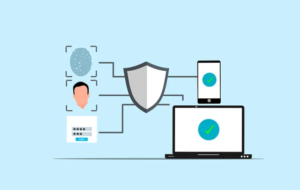
The pattern we see most often is a strong primary authentication flow protected by a weak account recovery flow. Attackers walk straight past your MFA by claiming they lost their phone. Your recovery process needs the same rigour as your login process.
Password Reset Flows Deserve Equal Care
Password reset is the alternative authentication path. Any organisation that invests heavily in primary authentication and lets users reset their password via an email link with no other verification has effectively reduced its authentication strength to the strength of the email account. Apply MFA to password resets. Notify users of password changes through multiple channels. Treat password reset attempts as a security event worth monitoring rather than a routine support workflow. Multi factor at every authentication moment, including reset flows, support contacts and elevated session prompts, raises the bar consistently. Inconsistent application of multi factor across the journey creates exactly the weak spots that attackers learn to exploit first.
Session Management Matters After Login
Once a user is authenticated the session itself becomes the target. Tokens with very long lifetimes, missing invalidation on logout, predictable identifiers and lax handling on shared devices all create openings. A penetration testing quote for application testing should explicitly include session handling, because the gaps here often outlast the underlying authentication logic.
Authentication is one of those rare areas where boring is good. The interesting ideas tend to be the ones that fail under stress. Authentication done well stays out of the user awareness. Authentication done badly tends to land on the news pages eventually. Web application security is a discipline that rewards patient investment. The teams that treat it as ongoing work consistently outperform the ones that treat it as a project with an end date.